Teeth Extractions
At Humber Bridge Dental, we provide both simple and surgical extractions.
What Is It?
Tooth extraction is the removal of a tooth from its socket in the bone.
What It's Used For
If a tooth has been broken or damaged by decay, your dentist will try to fix it with a filling, crown or other treatment. Sometimes, though, there’s too much damage for the tooth to be repaired. In this case, the tooth needs to be extracted. A very loose tooth also will require extraction if it can’t be saved, even with bone replacement surgery (bone graft).
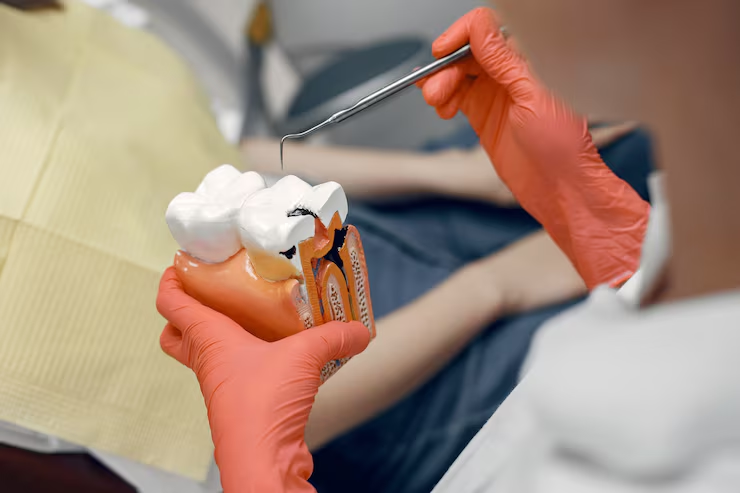
Here are other reasons:
- Some people have extra teeth that block other teeth from coming in.
- Sometimes baby teeth don't fall out in time to allow the permanent teeth to come in.
- People getting braces may need teeth extracted to create room for the teeth that are being moved into place.
- People receiving radiation to the head and neck may need to have teeth in the field of radiation extracted.
- People receiving cancer drugs may develop infected teeth because these medications weaken the immune system. Infected teeth may need to be extracted.
- Some teeth may need to be extracted if they pose a risk of infection after an organ transplant have a high risk of infection because they must take drugs that decrease or suppress the immune system.
- Wisdom teeth, also called third molars, are often extracted either before or after they come in. They commonly come in during the late teens or early 20s. They need to be removed if they are decayed, cause pain or have a cyst or infection. These teeth often get stuck in the jaw (impacted) and do not come in. This can irritate the gum, causing pain and swelling. In this case, the tooth must be removed. If you need all four wisdom teeth removed, depending on your dentist's recommendation.
Tooth Removal Procedures
At Humber Bridge Dental, we provide both simple and surgical extractions:
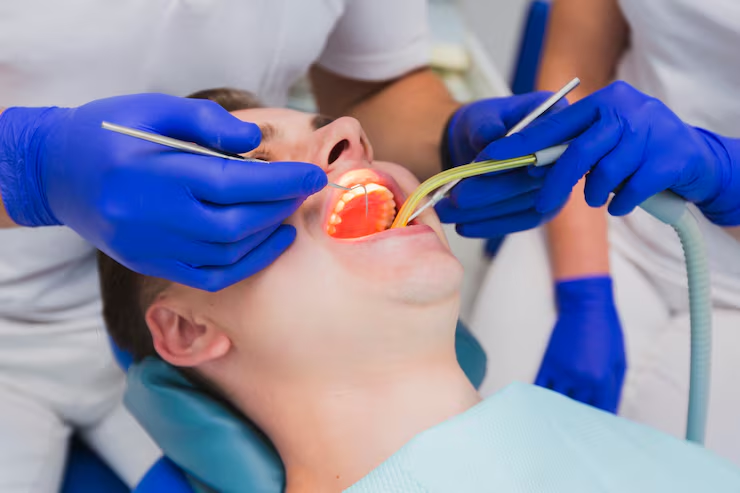
- A simple extraction – This procedure is on a tooth that can be seen in the mouth. For a simple extraction, the dentist loosens the tooth with an instrument called an elevator. Then the dentist uses forceps to remove the tooth.
- A surgical extraction – This is a more complex procedure, which is used if a tooth may have broken off at the gum line or has not erupted in the mouth. The dentist will make a small incision into your gum to surgically remove the broken tooth or impacted wisdom tooth.
Wisdom Teeth Extractions
What Are Wisdom Teeth?
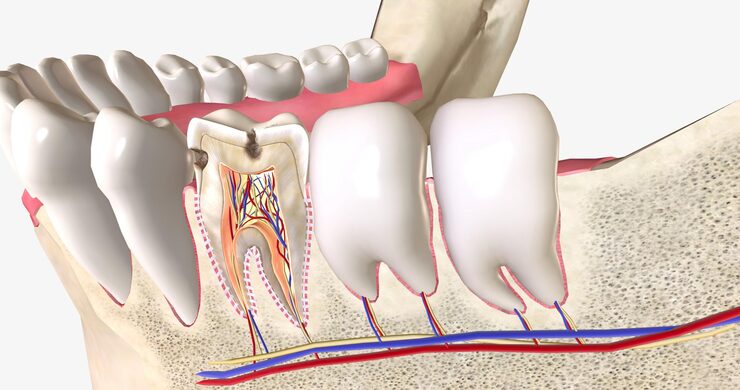
Wisdom teeth are the last molars on each side of the jaws. They are also the last teeth to emerge, or erupt, usually when a person is between 16 and 20.
Since wisdom teeth are the last permanent teeth to come in, or erupt, there is often not enough room left in your mouth to accommodate them. This can lead to wisdom teeth that are impacted, teeth that are trapped beneath the gum tissue by other teeth or bone. If teeth are impacted, swelling and tenderness may occur.
Wisdom teeth that only partially emerge or come in crooked can also lead to painful crowding and disease. Since teeth removed before age 20 have less developed roots and fewer complications, the Dental Association recommends that people between 16 and 19 have their wisdom teeth evaluated to see if they need to be removed.

Dr. Cicci
At Humber Bridge Dental, Dr. Mark Cicci attended The University of Toronto for his undergraduate studies and went on to graduate from The Faculty of Dentistry with honours in 1992. He has been practicing dentistry for over 20 years. At Kipling Dixon Dentist Dr. Cicci is a general dentist with a special interest in oral surgery. He accommodates our patients with wisdom teeth problems along with any teeth extraction. In most cases, he can remove teeth under local anesthesia, nitrous oxide (laughing gas), or oral moderate sedation.
How Are Wisdom Teeth Removed?
A tooth extraction is a relatively routine procedure. Your dentist or a dental specialist, called an oral surgeon, will recommend either “going to sleep” using general anesthesia, or numbing this area in your mouth with a local anesthesia.
After the tooth (or teeth) is removed, you may be asked to bite down softly on a piece of gauze for 30 to 45 minutes after you leave the office, to limit any bleeding that may occur. Some pain and swelling may occur, but they will normally go away after a few days; however, you should call your dentist if you have prolonged or severe pain, swelling bleeding or fever. In most cases, removal of wisdom teeth does not negatively affect your bite or oral health. Something interesting about your business here.